
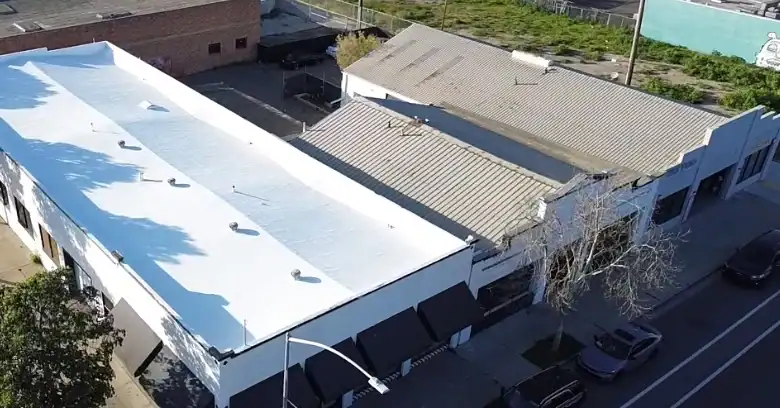
Researching Commercial Roofing Serving Grover Beach California?
Creative Roofing plans roof work for owners and managers who cannot afford a disruption, wherever a building needs a sound roof around Grover Beach California.
Call 805-723-2381 to arrange a visit to the property.
What Sets a Commercial Roof Apart
A building roof is built around drainage and access rather than steep pitch, and the failure modes are different too. A low-slope roof has to be sealed, not just overlapped, and it pays to think it through.
The cost of a failed roof is often higher inside the building than on top of it, and that makes prevention worth more than repair.
What Building Roofs Are Made Of
Rolled single-ply sheets are widely used because they are light, reflective and quick to install, so the choice affects how repairs are done later. Layered bitumen roofs remain common on buildings of every age, and they suit many situations where traffic and equipment are heavy. Metal roofing is used on some commercial buildings, particularly those with a steeper pitch, so the building and its use drive the decision.
How Water Leaves a Building Roof
Ponding water speeds up wear and adds weight the structure has to carry, and it pays to think it through. Leaves, seed pods and windblown trash gather in corners and drains over the summer, and a clogged drain can load a roof beyond its design.
Working Around Machinery
Heating and cooling units, exhaust fans and vents sit on most commercial roofs, and many leaks start there rather than in the open field. Repeated traffic on an unprotected membrane leaves it thin and scuffed, so the best owners plan the routes in advance.
Strong Sun on a Flat Surface
Heat and ultraviolet light age a roof surface more than rain does, and reflective surfaces stay cooler. Owners often look at reflective roofing for the savings on cooling, and the details of the benefit depend on the building.
Inspections and Upkeep
A commercial roof lasts longest when someone looks at it regularly, and it gives you a record to show a buyer or lender. Photographs from each visit help track changes over time, and the results show up in fewer emergency calls.
Choosing the Right Level of Work
Not every aging roof needs a full tear-off, so ask for evidence before agreeing to a plan. Replacing only the surface over saturated insulation hides the problem without solving it, and surprises are the expensive part.
Working in an Occupied Building
Work over occupied space is staged carefully to keep people safe and dry, and communication with tenants is part of the job. Safety at the edge of a roof is a serious matter for the crew and for people below, and plan for parking and deliveries as well.
Comparing Commercial Roofing Proposals
The scope of work should list drains, flashing, curbs and any insulation to be added, and the cheapest-looking option may leave things out. A contractor should be willing to explain how the work will be checked while it is in progress, and it is easy to overlook.
Tracing a Leak Over a Business
Water travels along decking, insulation and ductwork before it shows up on a ceiling, and the real source is usually near equipment or an edge. Common sources include seams, drains, flashing at walls and the base of every pipe, and a good survey starts with those. Testing helps decide whether a repair will hold or the roof needs more extensive work, and the cost is small next to a wrong decision.
Perimeter Details and Attachment
The edges and corners of a flat roof take the highest wind loads, and the perimeter needs extra fastening. Coping and edge flashing should be firmly attached and free of gaps, so it deserves a look after any windy spell.
Parapet Walls and Their Weak Points
Flashing at the wall is one of the most failure-prone parts of a low-slope roof, and that is worth keeping in mind. Stucco, masonry and metal walls each need a different kind of termination, and a repair there often needs more than a bead of caulk.
Restoring a Roof Without Tearing It Off
Acrylic, silicone and urethane are the main families of liquid roof coatings, and a coating is only as good as the surface beneath it. Surface treatments help sound roofs, not ones that are failing underneath, and an honest contractor will say so.
When the Roof Covers an Acre
Big projects need a plan for storage, staging and phasing, and weather windows matter more at this scale. Shared roofs raise questions about who is responsible and who pays, and the owner usually coordinates the work. Residents expect notice before work begins above their homes, so schedules are shared in writing.
Planning a Roof Budget Without Surprises
Treating the roof as an asset with a lifespan is the smart approach, and regular inspections help estimate the timing. Choosing on the lowest initial figure alone can cost more over the life of the building, and weigh the trade-offs honestly.
Insulation Under the Membrane
Insulation under a flat roof keeps the building comfortable and reduces energy use, so keeping them dry is essential. Extra layers under the membrane help it resist wear from equipment and walking, and that is worth keeping in mind. Tapered insulation can create slope on a roof that is otherwise dead flat, and it pays to think it through.
Preparing a Building Roof for the Rainy Season
Rooftop units should be examined for loose panels, failed seals and missing fasteners, since a stray panel can let rain into the system, and a little care goes a long way.
Talk to Us About Your Building
Anyone sorting out Commercial Roofing in Grover Beach California is one call away from a straight answer, with 805-723-2381 ready whenever you want to talk. Calling sooner rather than later keeps repair costs and disruption smaller, and we are glad to help you sort it out. Questions about an aging roof are easier to answer once someone has seen it, and the conversation can be brief. Tenants, lenders and insurers all take an interest in the state of a roof, so it pays to begin early.
Verified

Verified
Verified
Verified






















