
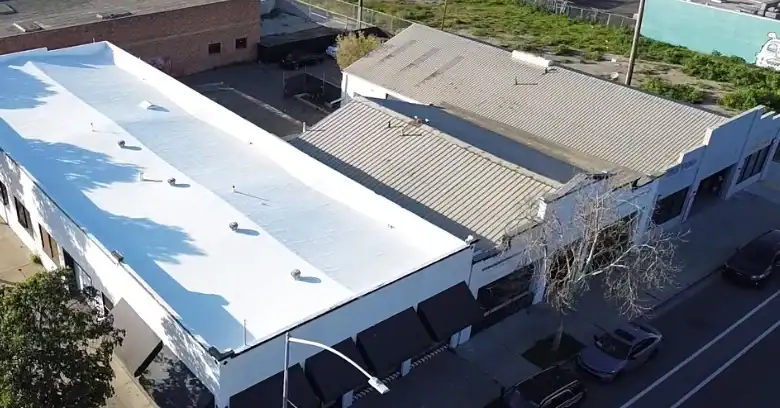
Planning Commercial Roofing Repair Across Orcutt California?
Creative Roofing works on the roofs of shops, offices, warehouses and apartment buildings, wherever a building needs a sound roof around Orcutt California.
Ring 805-723-2381 to talk through a commercial roof question.
Why a Building Roof Is a Different Animal
Low slopes make a commercial roof a different problem from a house roof, and that is worth keeping in mind. Where a house roof sheds water by gravity, a flat roof depends on seams and drains, and there is little margin for sloppy work.
The cost of a failed roof is often higher inside the building than on top of it, and a dry building is the whole point.
The Membranes Used on Flat Roofs
Rolled single-ply sheets are widely used because they are light, reflective and quick to install, and none of them is right for every building. Layered bitumen roofs remain common on buildings of every age, and the surface can be renewed with a coating or cap. Metal roofing is used on some commercial buildings, particularly those with a steeper pitch, and the right answer depends on what is already on the roof.
Keeping Water Moving
A roof that holds puddles after rain is telling you something, and a small amount of tapered insulation can fix ponding. Interior drains, edge scuppers and perimeter gutters each have their own failure points, and the first heavy rain turns it into a plug.
Equipment Is Where Leaks Start
A roof with a lot of equipment has a lot of penetrations to maintain, and sealants alone are rarely a lasting fix. Foot traffic that is not planned for wears the roof where it matters most, and it is easy to overlook.
How the Climate Affects a Building Roof
Sun and heat are the steady stresses on a commercial roof in this part of California, and the surface slowly dries, chalks and cracks. Reflective membranes and coatings can lower the temperature of the roof and the space beneath it, and it pays to think it through.
Planned Roof Care
A planned visit twice a year is a common routine for building owners, and a little care goes a long way. Typical upkeep includes clearing drains, checking seams and sealing small cracks, so the cost is modest.
Weighing the Options
Not every aging roof needs a full tear-off, and saving a good roof is cheaper than replacing it. Wet insulation stops insulating and adds heavy weight to the structure, and surprises are the expensive part.
Roofing Without Disrupting Operations
Roof work above an operating business needs planning so that normal activity can continue, and early notice prevents most problems. Anyone entering the roof during construction needs to be accounted for, so ask how the site will be protected.
Apples to Apples
Two proposals that look alike on the surface can differ a great deal in the details, so compare the line items one by one. Photographs and written records of the installation are useful for the owner, and it is worth requesting before the work starts.
Finding the Source of a Commercial Leak
Water travels along decking, insulation and ductwork before it shows up on a ceiling, and the real source is usually near equipment or an edge. The edges and the corners are where a flat roof tends to give way first, and it pays to think it through. Knowing where the water is saves guesswork and wasted effort, so it is worth asking about on a larger roof.
How Wind Affects a Flat Roof
A roof that is poorly attached shows the problem at its edges, so careful edge details are a mark of good work. A strip of metal that has come away is an invitation for wind and water, and it is easy to overlook.
Parapet Walls and Their Weak Points
Flashing at the wall is one of the most failure-prone parts of a low-slope roof, and it is worth checking after every storm season. Sealants at the top of a flashing dry out in strong sun and need redoing, and a repair there often needs more than a bead of caulk.
Fluid-Applied Systems
Restoration coatings are meant for roofs that are still basically sound, so cleaning and repairing come first. Applying a coat over a roof that is already saturated traps moisture and hides the problem, and the details are worth a closer look.
Big Buildings, Big Roofs
A roof covering a very large area has special needs for drainage, access and safety, and the roof can be done in sections. Common areas, walkways and canopies add their own details, and tenants appreciate being kept informed. Apartment and multifamily buildings add residents, balconies and shared walkways to the mix, and good communication is part of the job.
The Long View on Roof Spending
Treating the roof as an asset with a lifespan is the smart approach, and regular inspections help estimate the timing. Quality materials and careful installation tend to pay back over time, and weigh the trade-offs honestly.
The Layers Below the Surface
Most commercial roofs have rigid insulation boards between the deck and the waterproofing, and it is easy to overlook. Cover boards add a firm surface that protects insulation from foot traffic and hail-free impacts, and it is worth asking about. Slope built into the insulation is one of the cleanest ways to fix drainage problems, so raise the question before the proposal is final.
Late-Summer Readiness Checks
Late summer is the right moment to walk a commercial roof, because debris has accumulated through the dry months and the first storms are only weeks away, and a dry building is the reward.
Start With a Conversation
Owners weighing Commercial Roofing Repair in Orcutt California can reach us by phone, so dial 805-723-2381 when it suits you. Whether the roof is leaking today or just getting old, an early look gives you more options, and the first step is a simple phone call. Most building owners find that a short call clears up more than weeks of wondering, and it is easy to overlook. Tenants, lenders and insurers all take an interest in the state of a roof, and that is worth keeping in mind.
Verified

Verified
Verified
Verified
Verified






















