
Comparing Commercial Roofing Services Serving Orcutt California?
Creative Roofing plans roof work for owners and managers who cannot afford a disruption, wherever a building needs a sound roof around Orcutt California.
Contact us at 805-723-2381 to talk through a commercial roof question.
Roofs Over Businesses
Low slopes make a commercial roof a different problem from a house roof, and the failure modes are different too. Waterproofing on a low slope comes from the sheet itself rather than from the angle, and there is little margin for sloppy work.
A roof leak above a store, warehouse or office damages more than the ceiling, so planning ahead is the practical approach.
Common Low-Slope Roof Systems
Many newer commercial roofs use a single-ply membrane over insulation, and the details are worth a closer look. Older buildings often have built-up roofing, with several layers laid over one another, and they suit many situations where traffic and equipment are heavy. Spray foam and fluid-applied coatings are also used in some situations, and that is worth keeping in mind.
Where the Rain Goes
Standing water is the most common enemy of a low-slope roof, and ignoring it tends to shorten the life of the membrane. Interior drains, edge scuppers and perimeter gutters each have their own failure points, and the first heavy rain turns it into a plug.
What Sits on the Roof
Mechanical equipment on the roof creates dozens of places where the membrane has to be cut and sealed, so those details deserve the most attention in an inspection. Repeated traffic on an unprotected membrane leaves it thin and scuffed, and a contractor can mark them on the roof.
Sun, Heat and Energy Use
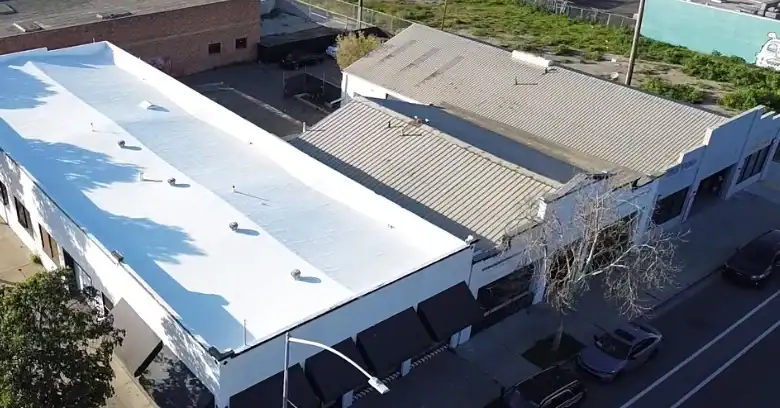
Heat and ultraviolet light age a roof surface more than rain does, and that is why white and light membranes are so common. Light-colored surfaces bounce much of the sunshine back instead of absorbing it, and the details of the benefit depend on the building.
Looking After a Roof Between Repairs
Roof maintenance is a habit more than a project, and the best times are before and after the rainy season. Maintenance work is mostly cleaning, tightening and resealing, and most items take only a short time.
When a Roof Reaches the End of Its Life
Localized damage can be repaired without touching the rest of the roof, and it is easy to overlook. Wet insulation stops insulating and adds heavy weight to the structure, and that is worth keeping in mind.
Tenants, Customers and Noise
Roof work above an operating business needs planning so that normal activity can continue, and noisy work can be timed around business hours. Access to the roof should be controlled while the work is in progress, and plan for parking and deliveries as well.
Making Sense of Competing Bids
Two proposals that look alike on the surface can differ a great deal in the details, and the difference is often in what is not mentioned. A contractor should be willing to explain how the work will be checked while it is in progress, and keep it with the building records.
Where the Water Really Gets In
On a flat roof the spot where water drips inside is rarely the spot where it came in, and the roofer has to follow the evidence across the roof. Penetrations and terminations are the usual suspects, so the inspection begins at the details. Moisture scans and core samples can show how far water has spread inside the roof, and a clear map makes planning easier.
Wind, Fasteners and Roof Edges
Gusts act on a roof like air over an aircraft wing, trying to lift it, and repairs there should not wait. Perimeter metal is the first line of defense against uplift, and a small fix now prevents a large one later.
Parapet Walls and Their Weak Points
The junction of roof and wall is where movement and water meet, and a gap at the top lets water run down behind the membrane. Mortar joints and wall coatings are part of the roof story, so it helps to look at the wall as well as the roof.
Coatings Explained
Restoration coatings are meant for roofs that are still basically sound, and the right product depends on the existing membrane. A coating is not a cure for a failed roof, and ask for the test results first.
When the Roof Covers an Acre
Large roofs pose logistical problems that small ones never do, and the schedule can run many weeks. Shared roofs raise questions about who is responsible and who pays, and that is worth keeping in mind. The roof of an apartment building protects many households at once, and noisy work is timed with consideration.
Spending Wisely on a Flat Roof
People who set aside funds for roof work avoid scrambling when the time comes, and a little care goes a long way. The total cost covers upkeep, patching and the eventual new roof, and the details in the scope explain the difference.
Insulation and Cover Boards
Insulation under a flat roof keeps the building comfortable and reduces energy use, and wet boards lose most of their value. A thin board over the insulation spreads loads and gives the membrane a better base, and the added cost is modest. Tapered insulation can create slope on a roof that is otherwise dead flat, so raise the question before the proposal is final.
Late-Summer Readiness Checks
Late summer is the right moment to walk a commercial roof, because debris has accumulated through the dry months and the first storms are only weeks away, so schedule it like any other maintenance.
Let Us Know What You Are Dealing With
Managers researching Commercial Roofing Services in Orcutt California are welcome to call and ask questions, so dial 805-723-2381 when it suits you. A roof that is checked before a failure is easier to plan around, so reach out whenever you are ready. A visit to the property turns a general worry into a specific plan, and describe what you are seeing. Tenants, lenders and insurers all take an interest in the state of a roof, and the paperwork can be kept with the building file.
Verified

Verified
Verified
Verified
Verified






















