
Thinking About New Roofs Around Orcutt California?
Creative Roofing covers each step of putting a new roof on a house, from Orcutt California out to the surrounding area.
Ring 805-723-2381 and we will talk through what the roof needs.
The First Step in a Roofing Project
The first visit is about gathering facts rather than picking a product, and the notes from that visit steer every later choice. Photographs taken on that first visit become the record for everything that follows, and each one goes into the notes.
Sunny slopes and shaded slopes tell different stories, and both matter, and a roofer who knows the area expects exactly that.
Choosing How Far to Go
Whether to fix or replace comes down to the condition of the layers beneath the surface, and the reasons should be easy to follow. Ask to see the problem areas, either in photographs or from the ladder, since the plan should make sense to the person paying for it.
Hidden damage found during tear-off is the usual reason a project grows beyond its first outline, and nobody should be surprised when it happens.
Picking a Roof Covering
The common choices are shingle, tile and metal, and each suits some houses better than others, but the framing and the slope decide more than preference does. The shade of a roof affects how hot it runs in July, so hold a sample against the house in daylight.
The Calendar and the Forecast
Roof work is easiest to schedule in the long dry stretch between rains, so exposed areas get covered at the end of each day. On very hot afternoons shingles soften and workers slow down, and a little care goes a long way.
What Happens on Demolition Day
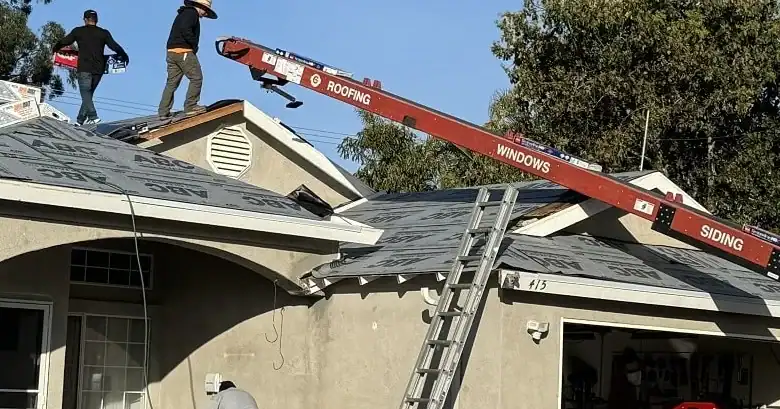
Old roofing comes off in layers, down to the bare decking, so landscaping and windows are covered before the first piece comes up. The deck is checked, mended and made flat for the next layer, and it is easier to fix now than after the roof is finished.
What Goes Down First
Underneath the visible covering sits a water-resistant layer that does much of the work, so self-adhering membrane goes where leaks tend to begin. Reaching this stage quickly is a sensible way to protect the interior, and rows are laid from the eave upward, each lapping the last.
Penetrations and Edges
Water finds the joints first, so flashing matters, and reusing old flashing under a new roof often comes back to bite. Vent boots and pipe collars are rubber or lead pieces that wear out before the roof does, so replacing them along with the roof removes a predictable problem.
Attic Airflow
Attic heat is behind many worn roofs and many large cooling bills, and the details are worth a closer look. Mixing vent types without a plan can short-circuit the airflow, and the answer should be part of the proposal.
Wrapping Up
A finished roof still leaves a yard full of scraps, nails and packaging, and a magnetic sweep picks up stray nails. Looking at the ridge, the valleys and the flashing with the roofer present is time well spent, so keep the paperwork and pictures together.
Local Rules and Paper Trails
Municipal offices have their own expectations for roof work, because surprises at the counter slow everything down. Certain hillside and edge-of-town areas follow stricter material rules than the valley floor, and the proposal should reflect them. The best paperwork leaves little room for misunderstanding, because what is written down is what everyone remembers.
Looking After Your Property During the Work
Roof work is hard on landscaping unless it is planned for, and it is reasonable to ask how this will be done. Pets, children and cars are best kept away from the work area, and a short talk the evening before covers the details. Inside the house, vibration can shake items from shelves and loosen attic insulation, and it is best done the night before.
Noise, Neighbors and Daily Life
Timing depends on the size of the roof, the complexity of the layout and the covering chosen, and the details are worth a closer look. Neighbors appreciate a heads-up before the noise begins, and the whole thing is over sooner than it seems. The loudest stretch is the tear-off, and it passes quickly, so consider a day out of the house if you can.
Questions Worth Asking Before You Agree
Ask what will be done with the old material and how the deck will be handled, and it pays to think it through. A proposal that only says shingles or tile is not specific enough, and a good roofer will be glad you asked. Ask what happens if something unexpected turns up under the old roof, and you will have a clear record.
Keeping a Roof in Good Shape
A roof that is never looked at tends to fail when it is least convenient, so put it on the calendar like any other chore. Overhanging trees drop material that collects in corners and valleys, and that is worth keeping in mind. Missing pieces, lifted edges or a new stain are all reasons to have someone look, and a photograph helps explain what you saw.
When to Schedule the Work
Planning ahead usually gives better choices than reacting to an emergency, and a calm decision is nearly always a better one. Late summer is hot but dependable, and crews are usually busy, and the best season is often the one that fits your calendar.
Insulation, Ducts and Cables Under the Roof
Insulation in the attic that is compressed, wet or missing should be noted, since a new roof is a good time to fix the whole assembly, and bring a flashlight if you can.
Start the Conversation
Sorting out New Roofs in Orcutt California is easier with someone who can look at the house, so dial 805-723-2381 and say what you are seeing. Every roof is different, so every conversation starts from the house itself, and we are glad to talk through the options. The decision often feels bigger before the call than it turns out to be, and nobody will rush you.
Verified

Verified
Verified
Verified
Verified






















