
Planning Residential Roof Contractors Near Me Serving Sacramento California?
Creative Roofing walks a household through every stage of a roofing project, serving Sacramento California and the places close by.
Phone 805-723-2381 and we will talk through what the roof needs.
Day One of a Roof Project
Every roofing job starts with someone climbing up to see what is actually there, and the notes from that visit steer every later choice. A proper look covers the slopes seen from the yard and the ones that are not, and it pays to think it through.
Heat is the quiet cause behind much of the wear seen on roofs here, so the wear is rarely even from one side to the next.
Choosing How Far to Go
A roof can be repaired, partly rebuilt or removed entirely, and the evidence decides what is done, and an honest roofer will say which one applies. Damage should be shown rather than only described, and a good roofer expects the question.
Weak spots in the deck only show themselves once the old roof is off, and nobody should be surprised when it happens.
Choosing Materials for Your Home
Asphalt shingles, concrete or clay tile and standing seam metal are the coverings most often put on homes here, so structure comes first and appearance second. The shade of a roof affects how hot it runs in July, so do not settle the question from a photograph.
Scheduling Around the Weather
Dry months are the busy season for roofing, since an open roof and rain do not mix, and a careful crew never leaves an opening to chance. Heat affects the work as well, and a little care goes a long way.
What Happens on Demolition Day
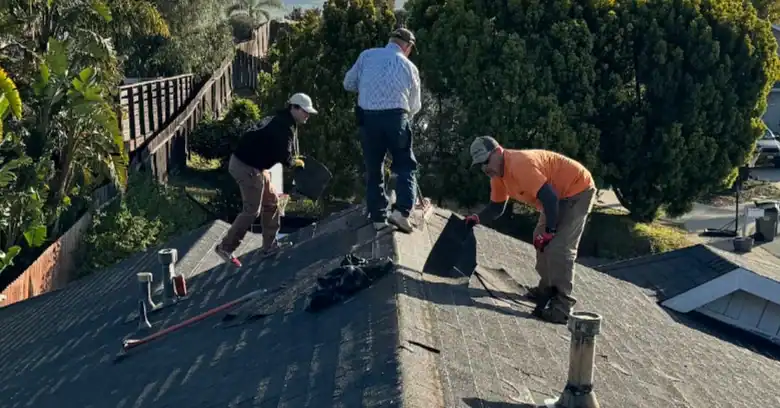
Taking the old roof off is the noisiest and messiest part of the job, and protecting the driveway and plants is worth asking about. Soft or split sheathing is cut out and new panels are fastened down, since good materials laid over a weak deck do not last.
Waterproofing Beneath the Surface
The first layer laid over the deck is a barrier against moisture, so self-adhering membrane goes where leaks tend to begin. Drying in gives the crew a margin against surprise weather, and the visible covering goes on from there.
Penetrations and Edges
Wherever the roof surface stops, a metal detail has to take over, since worn metal under new material becomes the weak link. Pipe seals made of soft materials fail early in strong sun, so this is an easy step to ask about.
Ventilation in a Warm Climate
An attic under a hot roof can reach extreme temperatures in summer, and the details are worth a closer look. A ventilation plan is worth a conversation before the job starts, because airflow is easy to plan now and hard to add later.
Cleanup and the Final Walk-Through
The job is not over until the yard looks like a yard again, and that is part of the work, not an extra. A walk around the finished roof with the roofer is a reasonable thing to ask for, and a saved record answers questions nobody has thought to ask yet.
Approvals Before the Work Starts
Municipal offices have their own expectations for roof work, so it is fair to ask who pulls the permit. Fire safety rules in some neighborhoods affect which coverings are allowed, and the proposal should reflect them. A proposal that names its materials and steps is easier to compare, because what is written down is what everyone remembers.
What Happens to the Yard
The ground around a house takes a beating during a roof project, and a careful crew sets them before the work begins. The area under the eaves is the one to avoid, and a little planning prevents most accidents. Attic contents are best covered or moved before the work starts, and it is best done the night before.
Noise, Neighbors and Daily Life
A simple roof may go quickly while a complicated one takes longer, and nobody can promise a date through a rain delay. Dumpsters and trucks may take up space on the road, and it is easy to overlook. The loudest stretch is the tear-off, and it passes quickly, so consider a day out of the house if you can.
A Short List for Comparing Proposals
A sensible first question is what exactly is included in the scope, and anything left vague deserves a follow-up. A proposal that only says shingles or tile is not specific enough, and a good roofer will be glad you asked. The way a roofer handles the unexpected says a lot about the whole operation, and you will have a clear record.
Maintenance After the Job
Checking the roof twice a year takes only a few minutes, and it is easy to overlook. Overhanging trees drop material that collects in corners and valleys, and that is worth keeping in mind. Missing pieces, lifted edges or a new stain are all reasons to have someone look, and the earlier the better.
Spring, Summer or Fall
Planning ahead usually gives better choices than reacting to an emergency, and the schedule fills quickly once the rains end. Any month can work with the right planning and a willingness to move a day, so do not feel the choice is locked in.
Insulation, Ducts and Cables Under the Roof
Insulation in the attic that is compressed, wet or missing should be noted, since a new roof is a good time to fix the whole assembly, and bring a flashlight if you can.
Ready When You Are
A call is the simplest way to begin planning work in Sacramento California, and the number is 805-723-2381. A modest repair and a full re-roof both begin with an honest look at the roof, and we are glad to talk through the options. A short conversation can turn a vague worry into a clear plan, and nobody will rush you.
Verified

Verified
Verified
Verified
Verified






















