
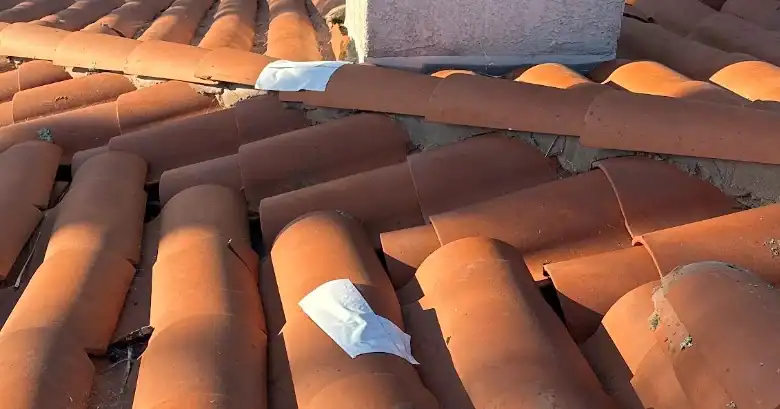
Considering Clay Tile Roofing in Santa Barbara California?
Creative Roofing handles the underlayment, battens and hand-shaped details that a fired or molded roof depends on, throughout Santa Barbara California and the neighboring communities.
Phone 805-723-2381 to talk through what a tile roof needs.
A Heavy Covering With a Long History
Clay and concrete units are individual pieces hung on a roof, overlapping like fish scales to shed water, and the overlap lets water run off quickly. Each type comes in profiles from rounded barrels to flat slabs and interlocking shapes, and the look varies enormously.
Heavy Roofs Need a Sound Structure
The framing is the foundation of any heavy roof, and an engineer may be involved in a conversion. Adding weight without adding support invites cracks, sagging and even failure, and a casual answer should give you pause.
The Hidden Layer That Does the Work
The units shed most of the rain, but the underlayment beneath is the layer that actually keeps the house dry, and it ages in the heat trapped under the pieces. A roof can look perfect from the street and be failing underneath, and that is worth keeping in mind.
Why Tile Suits Hot Weather
Air circulating under the curved shapes helps keep the house cooler in summer, and that is why roofs of this kind are so common in warm regions. Concrete may chalk or fade after long exposure, and a clean surface may need a sealer or fresh paint, and surface cleaning is far cheaper than replacement.
Cracks, Slips and Broken Pieces
Slipped pieces that have shifted out of line leave gaps that rain can reach, and replacing a broken piece is a quick job. Anyone who walks a roof of this kind needs to know where to step, because the wrong spot breaks the piece, so ask for a check after other work is done.
The Detail Work on a Heavy Roof
Valleys carry the most water on a roof, and the metal channel beneath the pieces must be sound, and that is worth keeping in mind. Repointing or replacing the ridge bedding is a routine part of keeping the roof in good shape, so look for loose or missing cap pieces.
Wildfire Season and Fire Resistance
Some systems use a mechanical clip at every piece, while others rely on adhesive along the edges, and the attachment method should be in the proposal. Keeping the roof and gutters clear of leaves and needles is part of staying safe, and local rules may set requirements for roof assemblies.
Matching the Work to the Condition
A re-lay means lifting the units, replacing the underlayment and flashing, and setting the pieces back in place, and a careful inspection answers both questions. Spalling concrete, crumbling clay and widespread cracks are signs that the surface is at its end, and the new material can be a different type.
How Units Are Bedded and Secured
Modern installations often replace mortar with clips, screws or flexible adhesive that tolerate movement without failing, and the best answer is specific to your roof. Eave closures and bird stops fill the gap beneath the lowest course, keeping out birds, rodents, leaves and windblown embers, and a little care goes a long way.
Cleaning a Heavy Roof Without Damaging It
Dust, pollen and shade can leave a roof of this type looking dull and streaked, even when it is perfectly sound, and the details are worth a closer look. A professional cleaner will explain the method and protect the plants and walls below, and it is easy to overlook.
A Better Base for a Long-Lived Roof
Heavy felt, synthetic sheets and self-adhering membranes are the common options, and they differ in heat resistance and tear strength, so ask which product is specified. Self-adhering membrane is often used in valleys, around penetrations and along the eaves, where leaks are most likely to begin, and good detailing here pays off for decades.
Planning Equipment Around the Units
Special hooks and flashing kits exist for these roofs, and an installer who uses them keeps the surface watertight, and ask who is responsible for the seals. A roofer can place a few walkway planks or marked steps to protect the routes that others will use, and the details are worth a closer look. Valleys and low points on a roof of this kind carry the heaviest flow in a downpour, and the units along their edges are cut to fit and sealed with care, and a small repair now prevents a leak later.
Picking the Right Unit for the House
Cast from cement and sand, concrete units take their color from pigment in the mix or from a coating applied to the surface, so ask to see samples of both. Samples of full-size pieces on a roof model show more than a catalog photograph ever can, and take your time with the choice.
Questions Worth Asking
A proposal that only says re-lay the roof does not tell you enough, and a little care goes a long way. Ask how the crew will handle the pieces, where they will be stored and how breakage will be managed, so do not hesitate to ask.
Stages of a Careful Re-Lay
A re-lay begins with the units being lifted in sections, stacked carefully and sorted so that sound pieces are kept and broken ones are set aside for replacement, so a re-lay is slower than a shingle job.
Wildfire Season and Heavy Roofs
Closure strips at the eaves and the ridge keep embers and animals out of the space beneath the units, so make it part of the late-summer routine.
Keeping Track of a Long-Lived Roof
After a re-lay or a repair, keep the photographs, the proposal and a few spare units stored somewhere safe, because color and profile matching gets harder with time, so ask the roofer for copies.
Next Steps for Your Roof
Those comparing Clay Tile Roofing in Santa Barbara California can reach us by phone, so use 805-723-2381 to set up the next step. Even a quick call can clear up questions about underlayment, repairs and timing, and the roof will tell the story once someone looks.
Verified

Verified
Verified
Verified
Verified






















