
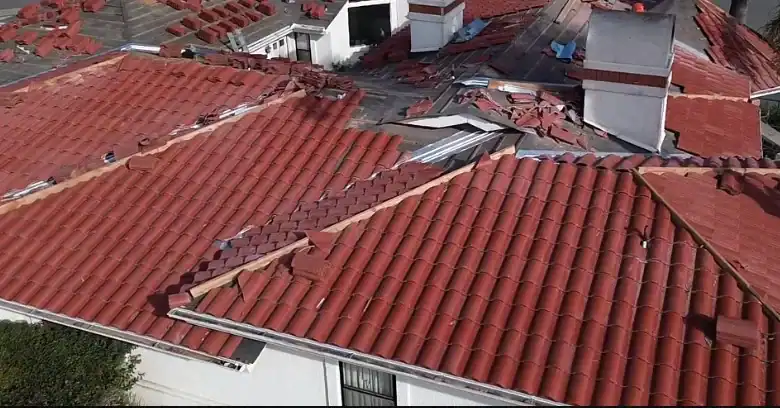
Weighing Tile Roofing Installation Around Santa Barbara California?
Creative Roofing keeps barrel, flat and interlocking roofs weathertight from the deck up, throughout Santa Barbara California and the neighboring communities.
Phone 805-723-2381 and we will explain what is involved.
Clay and Concrete Units in Plain Terms
Fired clay and molded concrete are the two materials used for the heavy, durable coverings found across the region, and the system works only when every piece is in place. Each type comes in profiles from rounded barrels to flat slabs and interlocking shapes, and the weight differs between materials.
Structure First, Style Second
A concrete or clay roof weighs several times more than a shingle roof, so the framing has to be up to the load, and a little care goes a long way. Even a roof originally built for heavy units can lose strength over time if water has damaged the wood, and the cost of that work belongs in the plan.
The Hidden Layer That Does the Work
Water gets under the pieces during wind-driven rain, and the underlayment carries it down and out, and a membrane that has dried out is a common reason for leaks. The felt paper on older roofs becomes brittle and breaks when the pieces are lifted, and the answer says a lot about the contractor.
Strong Sun and Fired Surfaces
The pieces rarely wear out from sun alone, which is why a well-built roof can last so long, and the color stays true for decades. Efflorescence, a white powdery bloom, can show on concrete units and is mostly cosmetic, and a little care goes a long way.
Finding Damaged Units
Falling branches and windblown debris can also crack pieces in a storm, so a close inspection from the roof is the only reliable method. Anyone who walks a roof of this kind needs to know where to step, because the wrong spot breaks the piece, and keep spare pieces from the original installation.
Edges and Intersections
Metal flashing and sealant protect these joints, and both age in strong sun, so look at how the work is finished. Dry-set ridge systems replace mortar with clips and are easier to maintain, so look for loose or missing cap pieces.
Holding Heavy Pieces in Place
Some systems use a mechanical clip at every piece, while others rely on adhesive along the edges, and the attachment method should be in the proposal. A tight installation with proper closures resists embers better than a loose one, and local rules may set requirements for roof assemblies.
Options for a Tired Roof
Re-laying saves the cost of new material and keeps the original look of the house, and a careful inspection answers both questions. A full replacement is a bigger project, but it resets the clock on the entire roof, and the new material can be a different type.
Adhesives, Clips and Mortar
Older roofs of this kind used mortar to bed the ridge and hip pieces and to seal the edges, and that mortar eventually cracks and crumbles, and be wary of mortar alone on a ridge. A missing eave closure is easy to spot from the ground as a dark gap along the lower edge of the roof, so these small parts deserve attention.
Moss, Stains and Keeping the Surface Clean
Dark streaks and patches of lichen are common on north faces and under trees, and they are mostly a cosmetic issue, and a sealer can slow the return of stains. High pressure is the wrong tool for a roof made of individual pieces, because the water is driven uphill under the laps, and it is easy to overlook.
A Better Base for a Long-Lived Roof
High-temperature rated products suit the hot conditions found beneath dark units on a sunny slope, and a thoughtful answer is a good sign. Self-adhering membrane is often used in valleys, around penetrations and along the eaves, where leaks are most likely to begin, and good detailing here pays off for decades.
Planning Equipment Around the Units
Mounting an array on a roof of this type means lifting or cutting units around every bracket and sealing the opening beneath, and a little care goes a long way. Service technicians for air conditioning and chimney sweeps should be told to step only where the roof can bear a person, and replacing a unit is far cheaper than repairing the leak. When rain arrives in a sudden burst after months of dry weather, the valley is the first place where a defect shows, and it is easy to overlook.
Choosing Between Clay and Concrete
Natural clay generally keeps its color for a very long time, while a coated concrete surface can fade or chalk and may need refreshing, and the better choice depends on the house and the budget. Samples of full-size pieces on a roof model show more than a catalog photograph ever can, so hold them against the house.
How to Weigh Two Bids
A thorough proposal names the material, the underlayment, the flashing and the method of attachment, so ask for them before signing. Ask how the crew will handle the pieces, where they will be stored and how breakage will be managed, and trust the tone of the conversation.
How a Restoration Proceeds
Pieces are removed row by row from the top down, and the crew takes care to avoid cracking more units than the roof already has, so a re-lay is slower than a shingle job.
Wildfire Season and Heavy Roofs
Before the dry season peaks, a quick walk around the house with binoculars can show broken units, loose ridge pieces and debris piled in the valleys, and a tidy roof is a safer roof.
Notes That Help the Next Owner
A small stack of leftover pieces from the original job is worth more than almost any other record, since replacements are rarely identical, and it pays to think it through.
Talk to Us About Your Roof
Homeowners weighing Tile Roofing Installation in Santa Barbara California can begin by describing the house and the roof they have, with 805-723-2381 ready whenever you want to talk. Even a quick call can clear up questions about underlayment, repairs and timing, and we are glad to help you sort it out.
Verified

Verified
Verified
Verified
Verified






















