
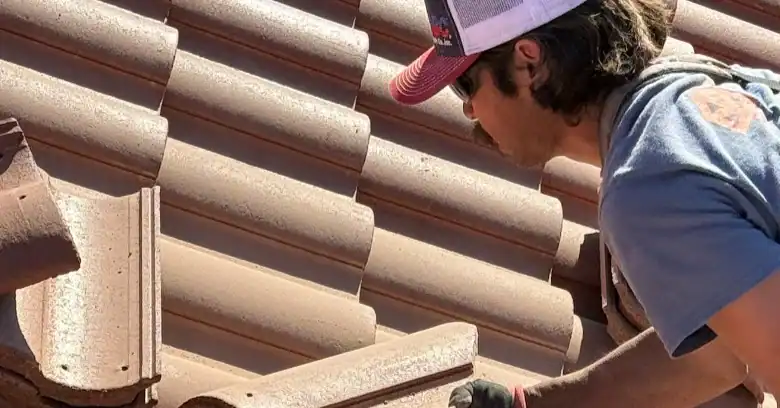
Ready for Concrete Tile Roofing for a Home in Santa Maria California?
Creative Roofing keeps barrel, flat and interlocking roofs weathertight from the deck up, for homes in Santa Maria California and the towns around it.
Call 805-723-2381 and ask about the roof over your house.
Clay and Concrete Units in Plain Terms
The surface you see is only the first line of defense on a roof like this, so the layers below matter more than most people expect. Concrete units are molded from cement and sand and colored through the body or on the surface, so samples help with the choice.
Checking the Rafters Before Choosing
Heavy coverings put real stress on rafters, trusses and walls, which is why the structure is checked first, and it should happen before materials are ordered. Rotted rafters or sheathing must be repaired before heavy material goes back on, and a casual answer should give you pause.
Underlayment Is the Real Waterproofing
The units shed most of the rain, but the underlayment beneath is the layer that actually keeps the house dry, and it ages in the heat trapped under the pieces. Modern synthetic and self-adhering underlayments last longer under high temperatures, so ask what product will go under the units.
How Heat Behaves Under the Pieces
Long dry summers are easy on the material itself, though the layers underneath age in the heat, and the color stays true for decades. Concrete may chalk or fade after long exposure, and a clean surface may need a sealer or fresh paint, and a roofer can tell the difference.
Cracks, Slips and Broken Pieces
Falling branches and windblown debris can also crack pieces in a storm, and replacing a broken piece is a quick job. Asking other trades to avoid walking on the roof prevents a lot of broken pieces, and the cost of a few replacements is small.
Edges and Intersections
Details where the pieces meet something else are the places most likely to leak, and a hurried job shows up in the first heavy rain. Repointing or replacing the ridge bedding is a routine part of keeping the roof in good shape, so look for loose or missing cap pieces.
How Units Are Secured
Though heavy, individual pieces must be fastened properly or they can slide or lift in strong gusts, and local rules in windy areas may require specific fastening. Embers do not ignite the pieces, though they can still collect in gaps and under the edges, so ask how gaps will be kept closed.
Deciding What an Aging Roof Needs
A re-lay means lifting the units, replacing the underlayment and flashing, and setting the pieces back in place, so ask for an assessment of the underlayment. Replacing the covering gives the chance to upgrade the structure, the ventilation and the details, so it is a time to consider all the options.
Ridge Bedding and Edge Details
Foam adhesives are widely used to secure units, particularly in areas where wind is a concern, because they bond quickly and resist uplift, and the method should be named in the proposal. Eave closures and bird stops fill the gap beneath the lowest course, keeping out birds, rodents, leaves and windblown embers, and a little care goes a long way.
Dirt, Lichen and Cosmetic Wear
Cleaning should be done carefully by someone who knows the material, since walking on the roof is a risk to the units themselves, and the result can be striking. Soft washing with a mild solution and a gentle rinse removes growth without harming the surface, and a post-cleaning inspection is a good idea.
Felt, Synthetic and Self-Adhering Options
Basic and premium underlayment differ little in cost when set against the cost of the roof, and the choice should be in writing. Self-adhering membrane is often used in valleys, around penetrations and along the eaves, where leaks are most likely to begin, and the extra layer is inexpensive protection.
Planning Equipment Around the Units
Mounting an array on a roof of this type means lifting or cutting units around every bracket and sealing the opening beneath, and ask who is responsible for the seals. Satellite dishes, antennas and holiday lights are small additions that can break units if the installer is careless or the fasteners are driven in the wrong place, and inspect after every visit. Valleys and low points on a roof of this kind carry the heaviest flow in a downpour, and the units along their edges are cut to fit and sealed with care, so make valleys the first stop on any check.
Two Materials, Two Personalities
Between the two, concrete is usually the more economical, while clay is prized for its authentic look and its long record of service, and the difference shows up in the details. Samples of full-size pieces on a roof model show more than a catalog photograph ever can, and think about the neighbors as well.
Getting Specific About a Heavy Roof
A thorough proposal names the material, the underlayment, the flashing and the method of attachment, and the details are what you are really buying. A roofer who has re-laid many roofs knows the pitfalls and can describe them without hesitation, so do not hesitate to ask.
How a Restoration Proceeds
Sorting the units as they come off lets the roofer count how many replacements will be needed and order matching pieces, so a re-lay is slower than a shingle job.
Wildfire Season and Heavy Roofs
Clearing leaves and needles from valleys, gutters and the back of chimneys removes fuel that could ignite from a flying ember, and repair broken pieces before the winds arrive.
Notes That Help the Next Owner
Photographs taken during the work show what lies under the units, which is a view that nobody sees again for decades, so ask the roofer for copies.
Next Steps for Your Roof
A conversation about Concrete Tile Roofing in Santa Maria California usually starts with the age and condition of the roof, and 805-723-2381 reaches someone who can help. There is no pressure in asking about your roof, and the first step is just a phone call.
Verified

Verified
Verified
Verified
Verified






















