Weighing Residential Roof Contractors Near Me Near Santa Maria California?
Creative Roofing walks a household through every stage of a roofing project, from Santa Maria California out to the surrounding area.
Reach out at 805-723-2381 and tell us what has you thinking about the roof.
Day One of a Roof Project
Nothing gets decided until someone has walked the roof, since guessing from the ground leads to surprises later. The roofer checks the surface, the flashing, the vents and the gutter line, then the attic if it can be reached, and each one goes into the notes.
Months of direct sun take a steady toll on whatever covers a house, and the sunniest side is usually the oldest-looking side.
Deciding What the Roof Needs
Not every worn roof needs replacing, and not every leak is a small one, and the reasons should be easy to follow. Findings that cannot be pointed to are findings worth questioning, since the plan should make sense to the person paying for it.
When the decking underneath is damaged, the scope of the job grows, and it helps to know that before the work begins.
Material Decisions
The common choices are shingle, tile and metal, and each suits some houses better than others, but the framing and the slope decide more than preference does. Sun exposure makes color a practical question as well as a visual one, and it pays to look at them at different times of day.
Planning for Rain and Heat
For most of the year the weather here lets a roof go on with few interruptions, and crews watch the forecast closely. Roof surfaces get hot enough in July to change how materials behave, and a little care goes a long way.
Removing the Old Roof
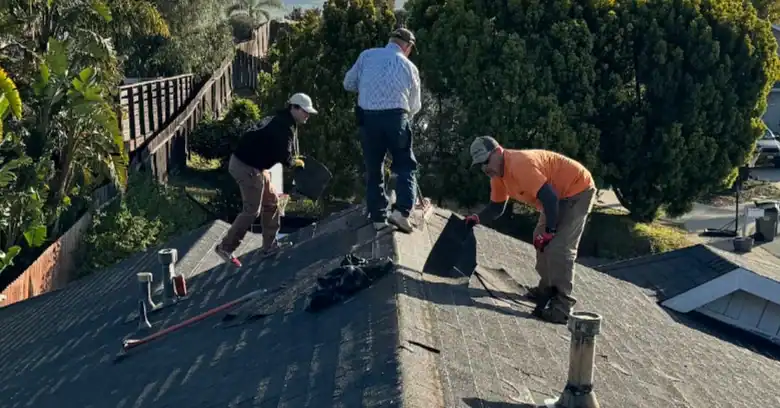
Removal of the old material is where the project gets loud, and magnets and rakes pick up the nails that fall. Repairs to the deck happen now, before anything new is installed, and skipping the step shortens the life of an otherwise good roof.
The Hidden Layers
The first layer laid over the deck is a barrier against moisture, and metal edging is set at the eaves and rakes before the covering. With the barrier in place the roof can shed rain even before the covering is finished, and that is worth keeping in mind.
Details That Decide Whether It Leaks
Chimneys, skylights, vent pipes and walls all need flashing worked into the roof, since worn metal under new material becomes the weak link. Plumbing vents are among the most common sources of small leaks, and a little care goes a long way.
Attic Airflow
Attic heat is behind many worn roofs and many large cooling bills, and vents at the eaves let cooler air in. Adding vents at random may do little more than cut holes in the roof, because airflow is easy to plan now and hard to add later.
Wrapping Up
The job is not over until the yard looks like a yard again, and a magnetic sweep picks up stray nails. Keeping a short record of the materials used helps with later maintenance, so keep the paperwork and pictures together.
Approvals Before the Work Starts
Depending on the town, a re-roof may need a permit before any material is ordered, and a little care goes a long way. Fire safety rules in some neighborhoods affect which coverings are allowed, and a roofer working in the area should already know them. Vague wording on a proposal is a reason to ask questions, so compare any two side by side.
Looking After Your Property During the Work
A busy work site needs boundaries, and it is reasonable to ask how this will be done. Cars parked in the driveway can be struck by falling nails or pieces of shingle, and keep a path clear for deliveries. Light fixtures and wall hangings can shift when a roof is being removed above them, and a little care goes a long way.
Living Through a Roof Project
The calendar for a job is set by the roof, not by the wish list, and the crew should give you a realistic window. Roof work is loud, and the street will hear it, so a friendly note goes a long way. Remote workers may want a quiet spot elsewhere for a day or two, so consider a day out of the house if you can.
A Short List for Comparing Proposals
Ask how the roof will be ventilated and how the flashing will be handled, and listen to how the answer is given. Ask for the materials by name and manufacturer so you can look them up, so ask before you sign anything. Ask what happens if something unexpected turns up under the old roof, and the details are worth a closer look.
Small Habits That Extend Roof Life
A roof that is never looked at tends to fail when it is least convenient, and binoculars make the job easy. Sweeping leaves off the roof and out of valleys prevents trouble, and that is worth keeping in mind. Call a roofer after a major wind event or if you see a stain on a ceiling, and it pays to think it through.
When to Schedule the Work
Many homeowners wait until a leak appears before they think about a roof, so a few weeks of lead time is common. Late summer is hot but dependable, and crews are usually busy, and the covering you choose affects the timing as well.
What the Crew Sees Inside the House
When the old roof comes off, the crew sees the underside of the deck, and stains, rust on nail tips and darkened wood tell the story of past leaks, and the findings can change the scope.
Ready When You Are
Homeowners comparing Residential Roof Contractors Near Me in Santa Maria California can simply pick up the phone, with 805-723-2381 ready whenever you are. The size of the project changes the schedule but not the principle, so there is no harm in asking questions first. Taking the first step is usually the hardest part of any home project, and that is a good place to begin.
Verified

Verified
Verified
Verified