
Weighing Residential Roof Installation Around Santa Maria California?
Creative Roofing handles the planning, the tear-off and the cleanup of a roof job, working in Santa Maria California and nearby.
Ring 805-723-2381 and describe the project you have in mind.
Day One of a Roof Project
Nothing gets decided until someone has walked the roof, and that is worth keeping in mind. Loose granules, lifted edges, cracked flashing and soft spots all say something about the layers below, so the visit usually takes longer than people expect.
Sun and heat age a roof in ways that rain alone never would, and a roofer who knows the area expects exactly that.
Choosing How Far to Go
Not every worn roof needs replacing, and not every leak is a small one, so a clear explanation matters more than a quick quote. Findings that cannot be pointed to are findings worth questioning, since the plan should make sense to the person paying for it.
Hidden damage found during tear-off is the usual reason a project grows beyond its first outline, so a note on how it will be handled saves arguments later.
Choosing Materials for Your Home
Most houses here wear one of three coverings, and the choice shapes everything else, since heavy coverings need a frame built to carry them. A roof that faces strong sun all afternoon behaves differently depending on its shade, and it pays to look at them at different times of day.
Timing the Work
Rain arrives in bursts, and a roof that is open when one comes needs protection, so exposed areas get covered at the end of each day. The temperature on the roof can run well above the temperature in the shade, and a little care goes a long way.
Tear-Off and Preparation
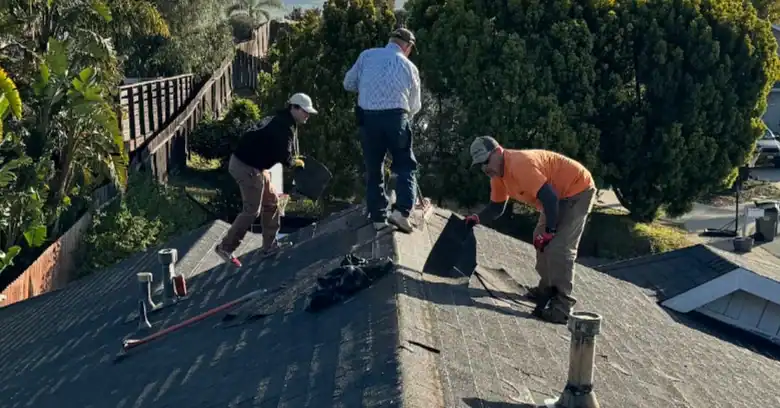
Tear-off gives the first real view of the structure under the roof, and debris goes into a bin or trailer rather than onto the lawn. The deck is checked, mended and made flat for the next layer, and it is easier to fix now than after the roof is finished.
The Hidden Layers
Beneath every roof is a membrane that catches whatever the surface lets through, and metal edging is set at the eaves and rakes before the covering. Drying in gives the crew a margin against surprise weather, and rows are laid from the eave upward, each lapping the last.
Penetrations and Edges
Water finds the joints first, so flashing matters, since worn metal under new material becomes the weak link. Plumbing vents are among the most common sources of small leaks, and a little care goes a long way.
Ventilation in a Warm Climate
Attic heat is behind many worn roofs and many large cooling bills, and vents at the eaves let cooler air in. A ventilation plan is worth a conversation before the job starts, and the answer should be part of the proposal.
Cleanup and the Final Walk-Through
The job is not over until the yard looks like a yard again, and a magnetic sweep picks up stray nails. A walk around the finished roof with the roofer is a reasonable thing to ask for, and it only takes a few minutes.
Permits and Paperwork
Local requirements shape the job before the first shingle is touched, and a little care goes a long way. Wildfire concerns have changed what many local codes ask of a roof, since the covering you pick has to be one the town accepts. Vague wording on a proposal is a reason to ask questions, so compare any two side by side.
Protecting the House and Yard
The ground around a house takes a beating during a roof project, and it is reasonable to ask how this will be done. The area under the eaves is the one to avoid, and a short talk the evening before covers the details. Inside the house, vibration can shake items from shelves and loosen attic insulation, and it is best done the night before.
Living Through a Roof Project
The calendar for a job is set by the roof, not by the wish list, and the crew should give you a realistic window. Informing nearby households is a courtesy that pays off, and early starts mean early noise. Pets are often the ones most bothered by the commotion, and a plan for the loud days makes them easier.
Questions Worth Asking Before You Agree
Ask how the roof will be ventilated and how the flashing will be handled, and listen to how the answer is given. Product names and thicknesses on the proposal let you compare like with like, and take your time reading it. Surprises are normal, and a process for them is a sign of a well-run job, and settle it before the first day.
Looking After a New Roof
Even a new roof benefits from an occasional look from the ground, and the best times are before the rainy season and after the first big storm. Trim branches that touch or hang over the roof, and it also reduces fire risk in dry months. Waiting on a small problem usually makes it more expensive, and it is far easier to repair than to rebuild.
Timing a Roof Project Through the Year
Booking early in the dry season leaves time to compare more than one proposal, and a little care goes a long way. Spring can bring the first showers, so flexibility helps, and the details are worth a closer look.
Attic Findings That Change the Plan
The attic is the roof as seen from below, and it often gives the clearest picture of how the roof has been performing, and bring a flashlight if you can.
Ready When You Are
Anyone researching Residential Roof Installation in Santa Maria California is one call away from a straight answer, with 805-723-2381 ready whenever you are. A modest repair and a full re-roof both begin with an honest look at the roof, so there is no harm in asking questions first. The sooner the roof is looked at, the more choices you tend to have, and the next step becomes obvious.
Verified

Verified
Verified
Verified
Verified






















