
Thinking About Residential Roof Services for a Home in Santa Maria California?
Creative Roofing walks a household through every stage of a roofing project, for homes in Santa Maria California and the towns around it.
Call 805-723-2381 and describe the project you have in mind.
The First Step in a Roofing Project
The first visit is about gathering facts rather than picking a product, and a rushed visit tends to cost more than it saves. Photographs taken on that first visit become the record for everything that follows, and each one goes into the notes.
Sunny slopes and shaded slopes tell different stories, and both matter, and a little care goes a long way.
What Should Actually Be Done
Not every worn roof needs replacing, and not every leak is a small one, and the reasons should be easy to follow. A roofer who explains the reasoning in plain terms is easier to trust with the work, because you are the one living under the result.
Hidden damage found during tear-off is the usual reason a project grows beyond its first outline, so a note on how it will be handled saves arguments later.
Picking a Roof Covering
Most houses here wear one of three coverings, and the choice shapes everything else, so structure comes first and appearance second. Color deserves more thought than it usually gets, and that is worth keeping in mind.
Scheduling Around the Weather
For most of the year the weather here lets a roof go on with few interruptions, and temporary dry-in layers keep the house safe overnight. Roof surfaces get hot enough in July to change how materials behave, and a little care goes a long way.
What Happens on Demolition Day
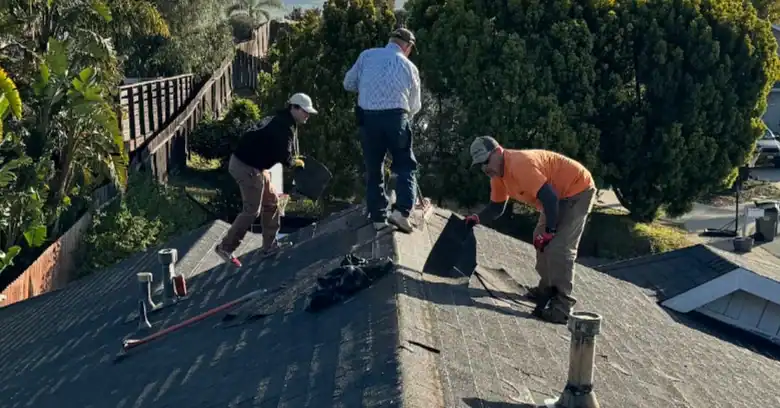
Taking the old roof off is the noisiest and messiest part of the job, and debris goes into a bin or trailer rather than onto the lawn. Once the deck is bare, any damaged boards are replaced, so this is not the place to save time.
Underlayment and Drying In
The surface you see is only the outer layer of a roof, and valleys, eaves and penetrations get extra layers. Once the underlayment is down, the house is considered dried in, and the finished surface is installed over a sound base.
Penetrations and Edges
Chimneys, skylights, vent pipes and walls all need flashing worked into the roof, and it pays to think it through. The seal around a vent pipe rarely lasts as long as the surface around it, and a new roof should not depend on a seal that is already tired.
Keeping the Attic Cooler
An attic under a hot roof can reach extreme temperatures in summer, since warm air rises on its own when it is given a path. More vents are not always better, because intake and exhaust have to be balanced, and a roofer should be able to describe it simply.
Leaving the Property Clean
The job is not over until the yard looks like a yard again, and a magnetic sweep picks up stray nails. Keeping a short record of the materials used helps with later maintenance, and it pays to think it through.
What the City Wants to See
Municipal offices have their own expectations for roof work, and the process is easier when someone handles it for you. Wildfire concerns have changed what many local codes ask of a roof, so ask how the plan meets the rules for your street. The best paperwork leaves little room for misunderstanding, and it is easy to overlook.
What Happens to the Yard
A roofing job puts a lot of weight, noise and debris around a house, and it is reasonable to ask how this will be done. Cars parked in the driveway can be struck by falling nails or pieces of shingle, so tell the crew about anything fragile or valuable. Attic contents are best covered or moved before the work starts, so it is wise to take down fragile pictures first.
What the Household Should Expect
Timing depends on the size of the roof, the complexity of the layout and the covering chosen, and the details are worth a closer look. Neighbors appreciate a heads-up before the noise begins, and most people are tolerant when they know what to expect. Household routines bend a little while the work is under way, and everything returns to normal once the crew packs up.
Questions Worth Asking Before You Agree
Ask how the roof will be ventilated and how the flashing will be handled, and it pays to think it through. The product line matters as much as the type of covering, and it should be written on the proposal. Talk through how changes to the plan will be handled and agreed, and keep the discussion friendly but specific.
Maintenance After the Job
A roof that is never looked at tends to fail when it is least convenient, and it is easy to overlook. Sweeping leaves off the roof and out of valleys prevents trouble, and it also reduces fire risk in dry months. Missing pieces, lifted edges or a new stain are all reasons to have someone look, and the earlier the better.
Choosing the Right Season
Many homeowners wait until a leak appears before they think about a roof, so a few weeks of lead time is common. Any month can work with the right planning and a willingness to move a day, and a good roofer will explain the trade-offs.
Checking the Space Beneath the Deck
Rust on the points of roofing nails and dark patches on the sheathing are signs that moisture has been present for some time, and bring a flashlight if you can.
Talk to Us About Your Roof
Sorting out Residential Roof Services in Santa Maria California is easier with someone who can look at the house, so dial 805-723-2381 and say what you are seeing. A modest repair and a full re-roof both begin with an honest look at the roof, and we are glad to talk through the options. Putting off a roof question rarely makes it easier to answer, and that is a good place to begin.
Verified

Verified
Verified
Verified
Verified






















