
Thinking About Residential Roofing Installation Serving Santa Maria California?
Creative Roofing handles the planning, the tear-off and the cleanup of a roof job, across Santa Maria California and the neighboring communities.
Ring 805-723-2381 and describe the project you have in mind.
The First Step in a Roofing Project
The first visit is about gathering facts rather than picking a product, and a rushed visit tends to cost more than it saves. Photographs taken on that first visit become the record for everything that follows, and each one goes into the notes.
Sun and heat age a roof in ways that rain alone never would, so the wear is rarely even from one side to the next.
Choosing How Far to Go
A roof can be repaired, partly rebuilt or removed entirely, and the evidence decides what is done, and the recommendation should come with the reasons attached. A roofer who explains the reasoning in plain terms is easier to trust with the work, since the plan should make sense to the person paying for it.
Wood that has been wet for a long time has to be cut out and replaced, and it is easy to overlook.
Matching the Covering to the House
Asphalt shingles, concrete or clay tile and standing seam metal are the coverings most often put on homes here, and the style of the neighborhood often plays a part. The shade of a roof affects how hot it runs in July, and that is worth keeping in mind.
The Calendar and the Forecast
Roof work is easiest to schedule in the long dry stretch between rains, and it pays to think it through. Roof surfaces get hot enough in July to change how materials behave, and the plan bends to the heat rather than the other way around.
What Happens on Demolition Day
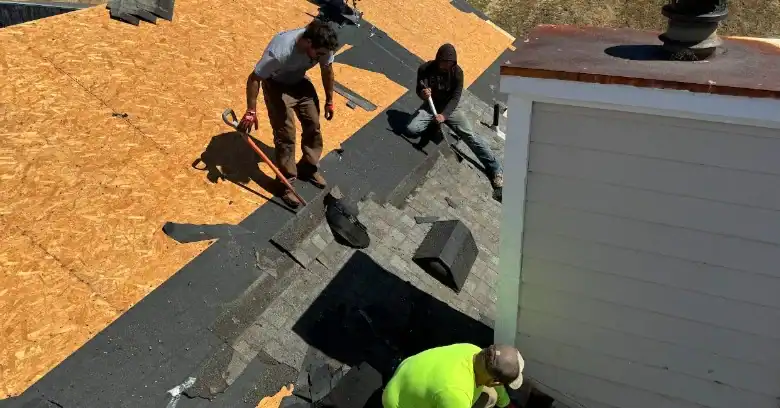
Taking the old roof off is the noisiest and messiest part of the job, and the details are worth a closer look. Repairs to the deck happen now, before anything new is installed, and skipping the step shortens the life of an otherwise good roof.
Waterproofing Beneath the Surface
The first layer laid over the deck is a barrier against moisture, so self-adhering membrane goes where leaks tend to begin. Reaching this stage quickly is a sensible way to protect the interior, and that is worth keeping in mind.
Penetrations and Edges
Chimneys, skylights, vent pipes and walls all need flashing worked into the roof, so fresh metal is standard practice among careful crews. Vent boots and pipe collars are rubber or lead pieces that wear out before the roof does, and putting in new boots costs little when the roof is already open.
Air Under the Roof
Attic heat is behind many worn roofs and many large cooling bills, and a proper system draws air in low and sends it out high. The design of the system matters more than the number of vents, and a roofer should be able to describe it simply.
The Last Day on Site
When the last piece is installed, the cleanup begins, and covers come off the landscaping and the beds are inspected. A walk around the finished roof with the roofer is a reasonable thing to ask for, and a saved record answers questions nobody has thought to ask yet.
What the City Wants to See
Replacing a roof usually involves the local building department in some way, and a little care goes a long way. Wildfire concerns have changed what many local codes ask of a roof, so ask how the plan meets the rules for your street. Vague wording on a proposal is a reason to ask questions, so compare any two side by side.
Keeping the Property Safe
A busy work site needs boundaries, and that is worth keeping in mind. Cars parked in the driveway can be struck by falling nails or pieces of shingle, and keep a path clear for deliveries. Hammering on the deck above can rattle a ceiling and drop dust into the rooms below, so it is wise to take down fragile pictures first.
Noise, Neighbors and Daily Life
A new roof usually takes a few days for an average house, though weather and size change that, and plan on some slack for the weather. A quick word with the people next door can head off complaints, and early starts mean early noise. Working from home during a roof job is possible, though not always pleasant, and that is worth keeping in mind.
Questions That Reveal the Difference
Find out who will be on the roof and who will be in charge of the job, and listen to how the answer is given. Ask for the materials by name and manufacturer so you can look them up, and it should be written on the proposal. The way a roofer handles the unexpected says a lot about the whole operation, and it is better to know in advance.
Maintenance After the Job
Even a new roof benefits from an occasional look from the ground, and it is easy to overlook. Keep the gutters clear of leaves and needles, especially at the end of the dry season, and that is worth keeping in mind. Early attention to a leak is almost always cheaper than late attention, and it is far easier to repair than to rebuild.
Is There a Best Time for a New Roof
Booking early in the dry season leaves time to compare more than one proposal, and calling in spring avoids the rush. Early fall is popular because the weather is still dry and the heat has eased, and the covering you choose affects the timing as well.
Attic Findings That Change the Plan
Insulation in the attic that is compressed, wet or missing should be noted, since a new roof is a good time to fix the whole assembly, so ask the roofer to look inside as well.
Ready When You Are
Questions about Residential Roofing Installation in Santa Maria California begin with a short phone call, so use 805-723-2381 to talk through the roof and the next step. Large or small, a roofing project goes best when the plan is clear before the work starts, so there is no harm in asking questions first. The sooner the roof is looked at, the more choices you tend to have, and that is a good place to begin.
Verified

Verified
Verified
Verified
Verified






















