
Searching for Residential Roofing Maintenance Near Santa Maria California?
Creative Roofing takes a roofing job from the first look to the last sweep of the yard, from Santa Maria California out to the surrounding area.
Dial 805-723-2381 and describe the project you have in mind.
Before Anything Is Torn Off
Nothing gets decided until someone has walked the roof, because the rest of the plan rests on the findings from that look. Loose granules, lifted edges, cracked flashing and soft spots all say something about the layers below, and that is the evidence a sensible plan is built on.
Heat is the quiet cause behind much of the wear seen on roofs here, so the south and west slopes get the closest attention.
Deciding What the Roof Needs
Not every worn roof needs replacing, and not every leak is a small one, so a clear explanation matters more than a quick quote. Damage should be shown rather than only described, so do not feel awkward about asking.
Wood that has been wet for a long time has to be cut out and replaced, and it is easy to overlook.
Shingle, Tile or Metal
Most houses here wear one of three coverings, and the choice shapes everything else, and the pitch of the roof narrows the field quickly. Color deserves more thought than it usually gets, and a full-size piece seen outdoors beats a catalog picture.
Scheduling Around the Weather
Rain arrives in bursts, and a roof that is open when one comes needs protection, so exposed areas get covered at the end of each day. Heat affects the work as well, and the plan bends to the heat rather than the other way around.
What Happens on Demolition Day
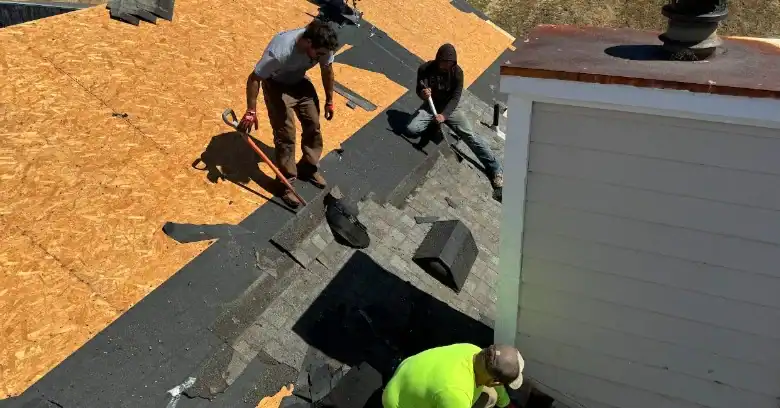
Removal of the old material is where the project gets loud, so landscaping and windows are covered before the first piece comes up. Soft or split sheathing is cut out and new panels are fastened down, and it is easier to fix now than after the roof is finished.
Protection Under the Covering
The surface you see is only the outer layer of a roof, and metal edging is set at the eaves and rakes before the covering. With the barrier in place the roof can shed rain even before the covering is finished, and rows are laid from the eave upward, each lapping the last.
Small Metal Pieces, Large Consequences
Chimneys, skylights, vent pipes and walls all need flashing worked into the roof, and it pays to think it through. Vent boots and pipe collars are rubber or lead pieces that wear out before the roof does, and a new roof should not depend on a seal that is already tired.
Attic Airflow
Attic heat is behind many worn roofs and many large cooling bills, so vents near the ridge give the hot air a way out. The design of the system matters more than the number of vents, and it is easy to overlook.
Wrapping Up
Final cleanup means more than a quick sweep, and a magnetic sweep picks up stray nails. A walk around the finished roof with the roofer is a reasonable thing to ask for, and a saved record answers questions nobody has thought to ask yet.
What the City Wants to See
Rules about reroofing differ from one city to the next, because surprises at the counter slow everything down. Certain hillside and edge-of-town areas follow stricter material rules than the valley floor, so ask how the plan meets the rules for your street. A proposal that names its materials and steps is easier to compare, so compare any two side by side.
What Happens to the Yard
The ground around a house takes a beating during a roof project, so tarps and plywood go down where debris will land. Pets, children and cars are best kept away from the work area, so tell the crew about anything fragile or valuable. The attic gets dusty during tear-off, and anything stored there will notice, so it is wise to take down fragile pictures first.
Noise, Neighbors and Daily Life
Timing depends on the size of the roof, the complexity of the layout and the covering chosen, and the details are worth a closer look. Neighbors appreciate a heads-up before the noise begins, so a friendly note goes a long way. Household routines bend a little while the work is under way, and a plan for the loud days makes them easier.
Questions Worth Asking Before You Agree
Ask what will be done with the old material and how the deck will be handled, and anything left vague deserves a follow-up. The product line matters as much as the type of covering, and take your time reading it. A change in scope should be written down and approved before the work continues, and keep the discussion friendly but specific.
Caring for the Roof Once It Is Done
A roof needs less attention than most parts of a house, but it needs some, so put it on the calendar like any other chore. Sweeping leaves off the roof and out of valleys prevents trouble, so it is worth doing before summer ends. Missing pieces, lifted edges or a new stain are all reasons to have someone look, and a photograph helps explain what you saw.
Is There a Best Time for a New Roof
Many homeowners wait until a leak appears before they think about a roof, and the schedule fills quickly once the rains end. Late summer is hot but dependable, and crews are usually busy, and the details are worth a closer look.
What the Crew Sees Inside the House
Rust on the points of roofing nails and dark patches on the sheathing are signs that moisture has been present for some time, and the findings can change the scope.
Next Steps for Your Roofing Project
Homeowners comparing Residential Roofing Maintenance in Santa Maria California can simply pick up the phone, and the number is 805-723-2381. The size of the project changes the schedule but not the principle, and the roof will tell the story once someone looks. The sooner the roof is looked at, the more choices you tend to have, so pick up the phone when you are ready.
Verified

Verified
Verified
Verified
Verified






















