Searching for Roof Services in Santa Maria California?
Creative Roofing takes a roofing job from the first look to the last sweep of the yard, from Santa Maria California out to the surrounding area.
Dial 805-723-2381 and tell us what has you thinking about the roof.
Before Anything Is Torn Off
Every roofing job starts with someone climbing up to see what is actually there, since guessing from the ground leads to surprises later. Photographs taken on that first visit become the record for everything that follows, and that is the evidence a sensible plan is built on.
Months of direct sun take a steady toll on whatever covers a house, and a little care goes a long way.
Setting the Scope of Work
The right answer depends on how much sound material is left on the house, and the details are worth a closer look. Findings that cannot be pointed to are findings worth questioning, because you are the one living under the result.
Wood that has been wet for a long time has to be cut out and replaced, and agreeing on the approach in advance beats debating it with the roof open.
Material Decisions
Asphalt shingles, concrete or clay tile and standing seam metal are the coverings most often put on homes here, so structure comes first and appearance second. The shade of a roof affects how hot it runs in July, so do not settle the question from a photograph.
Planning for Rain and Heat
Dry months are the busy season for roofing, since an open roof and rain do not mix, so exposed areas get covered at the end of each day. Roof surfaces get hot enough in July to change how materials behave, and finishing early keeps people and materials in better shape.
Stripping Down to the Deck
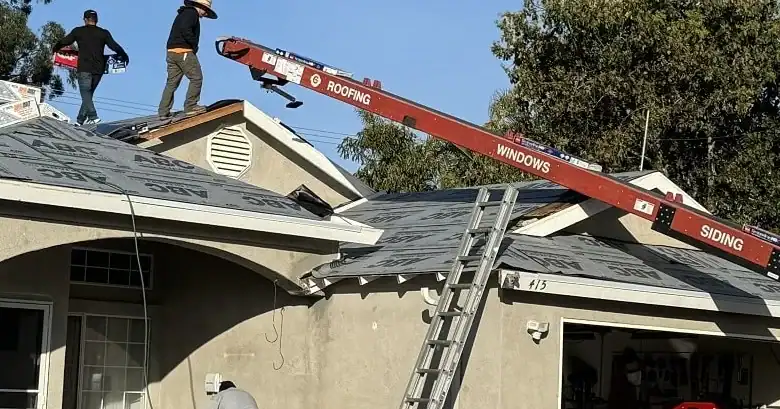
Tear-off gives the first real view of the structure under the roof, and protecting the driveway and plants is worth asking about. Once the deck is bare, any damaged boards are replaced, because new material is only as good as what it is fastened to.
Protection Under the Covering
The surface you see is only the outer layer of a roof, and valleys, eaves and penetrations get extra layers. Reaching this stage quickly is a sensible way to protect the interior, and the visible covering goes on from there.
Details That Decide Whether It Leaks
Chimneys, skylights, vent pipes and walls all need flashing worked into the roof, and it pays to think it through. Pipe seals made of soft materials fail early in strong sun, and a little care goes a long way.
Keeping the Attic Cooler
Warm air trapped under the deck works on the roof from below, since warm air rises on its own when it is given a path. Mixing vent types without a plan can short-circuit the airflow, so ask how the attic will breathe once the work is done.
Wrapping Up
When the last piece is installed, the cleanup begins, and covers come off the landscaping and the beds are inspected. Looking at the ridge, the valleys and the flashing with the roofer present is time well spent, and it makes future repairs and sales smoother.
Permits and Paperwork
Replacing a roof usually involves the local building department in some way, and the process is easier when someone handles it for you. Where fire risk is high, the roof covering and the vents face tighter standards, and the proposal should reflect them. A proposal that names its materials and steps is easier to compare, and it is easy to overlook.
Shielding Windows, Plants and Patios
Heavy materials, ladders and falling pieces all share the space around the walls, and it is reasonable to ask how this will be done. Moving vehicles out of range for the day is a simple precaution, and a short talk the evening before covers the details. Hammering on the deck above can rattle a ceiling and drop dust into the rooms below, and a sheet over stored boxes keeps the grit off.
What the Household Should Expect
The calendar for a job is set by the roof, not by the wish list, and plan on some slack for the weather. Informing nearby households is a courtesy that pays off, and most people are tolerant when they know what to expect. Pets are often the ones most bothered by the commotion, so consider a day out of the house if you can.
What to Ask Every Roofer
A sensible first question is what exactly is included in the scope, and write the answers down. Ask for the materials by name and manufacturer so you can look them up, and it should be written on the proposal. Talk through how changes to the plan will be handled and agreed, and you will have a clear record.
Keeping a Roof in Good Shape
Checking the roof twice a year takes only a few minutes, and binoculars make the job easy. Overhanging trees drop material that collects in corners and valleys, and it also reduces fire risk in dry months. Waiting on a small problem usually makes it more expensive, and it is far easier to repair than to rebuild.
Spring, Summer or Fall
Booking early in the dry season leaves time to compare more than one proposal, and the schedule fills quickly once the rains end. Late summer is hot but dependable, and crews are usually busy, and a good roofer will explain the trade-offs.
What the Crew Sees Inside the House
The attic is the roof as seen from below, and it often gives the clearest picture of how the roof has been performing, so ask the roofer to look inside as well.
Next Steps for Your Roofing Project
Sorting out Roof Services in Santa Maria California is easier with someone who can look at the house, and 805-723-2381 reaches the right person. A modest repair and a full re-roof both begin with an honest look at the roof, so there is no harm in asking questions first. The sooner the roof is looked at, the more choices you tend to have, and nobody will rush you.
Verified

Verified
Verified
Verified